Selecting brand videography: a checklist to compare vendors
Use this checklist to compare brand videography vendors on creative fit, production process, deliverables, ownership, timelines, and exact questions to ask.

Selecting brand videography: a checklist to compare vendors
Choosing a brand videography partner is more than picking the lowest bid or the flashiest showreel. The right vendor blends creative fit, a reliable production process, channel-ready deliverables, and clear usage rights. This article provides a compact, scoreable checklist you can use on discovery calls and when evaluating proposals, plus exact questions to ask and contract phrasing to copy into an RFP.
How to use this comparison checklist
Score each candidate on eight decision criteria using a 1 to 5 scale, where 1 is poor and 5 is excellent. Add the scores to produce a single comparative number for each vendor. A simple pass threshold is 28 out of 40, which means the vendor scored at least an average of 3.5 across all criteria. Use the checklist live on calls, then repeat it while reviewing written proposals.
Example scoring for two hypothetical vendors:
- Criteria (eight items): creative fit, showreel quality, preproduction planning, on-set workflow, postproduction and feedback loops, deliverables and social adaptations, usage and rights clarity, timeline and pricing transparency.
- Vendor A score: 5, 4, 4, 3, 4, 5, 3, 4 = 32 of 40 (pass).
- Vendor B score: 4, 3, 3, 4, 3, 3, 2, 3 = 23 of 40 (needs review).
After scoring, shortlist the top two vendors and request a scoped proposal with line-item deliverables, rights language, and a milestone schedule. Keep the same checklist handy during negotiation to avoid scope creep.
Creative fit: evaluate showreels and portfolios
Treat a showreel as a highlight reel, not a promise. Many buyers screen vendors by showreels, then compare prices and proposals, so decide whether you need a story-driven brand film or a product-focused spec video before evaluation. Ask vendors to clarify which they specialize in on your first call; industry advice recommends this step as an early filter DIGG Productions: How to Choose a Video Production Company.
What a showreel shows versus a portfolio
- Showreel: pacing, energy, editing style, and the vendor’s ability to sequence highlights into a single impression.
- Portfolio: full projects you can assess for narrative logic, stakeholder outcomes, and consistent tone across multiple assets.
Three portfolio signals that predict strong brand work
- Consistent tone across different projects, which suggests the vendor can adopt or maintain an existing brand voice.
- Multiple examples with objectives similar to yours, for example storytelling films, customer profile pieces, or campaign hero spots.
- Visible channel adaptations: the vendor delivered a hero film plus social cutdowns in the same project set.
Three warning signs of poor creative fit
- Only one-off spectacle pieces with no identifiable audience outcome or brand context.
- Portfolio items that repeatedly reuse the same assets or talent without variety in tone and framing.
- Showreels that hide project roles and outcomes, making it unclear what the vendor actually delivered.
Practice reviewing live examples such as a vendor’s portfolio to confirm how they adapt core films into social cuts and still frames.
Production process and creative collaboration
Compare how candidates structure collaboration and production. Ask for a clear description of preproduction services, script development, cast and crew roles, on-set decision points, and postproduction review rounds. Vendors that document and share a production timeline lower the risk of surprises.
Key preproduction items to compare
- Script and story development process, including stakeholder reviews and approval gates.
- Shot list and creative brief ownership: who produces them and how changes are handled.
- Location scouting, talent casting, and prop sourcing responsibilities.
Brand cohesion matters in execution. Simple choices such as clean backgrounds, consistent framing, and lighting continuity help videos feel like part of the same brand identity. Institutional brand guidance often highlights these production details to ensure consistency across assets see Northwestern’s videography guidance.
Deliverables and social adaptations to expect

Make deliverables explicit in every proposal. Common brand deliverables you should request and compare include:
- Hero film for owned channels such as your website or campaign landing page.
- Two to four cutdowns optimized for social feeds and ads.
- Vertical and square versions formatted for Instagram Reels, TikTok, and YouTube Shorts.
- Closed-caption files and SRTs, plus captioned video files ready for posting.
- High-resolution still frames or key art for ads and creative assets.
- Optional: camera masters or raw footage if you plan to repurpose content later.
Ask vendors to point to specific projects in their portfolio that include the exact deliverable mix you need so you can confirm they have delivered similar packages before.
Usage rights, ownership, and contract checklist
Usage and ownership are frequent sources of later dispute. Confirm these items in writing and use clear phrasing in the RFP.
- Master ownership: Will the client receive final masters and raw footage? Ask vendors to state the file types and delivery method.
- License scope: Which channels, territories, and duration are included? Request a channel-by-channel breakdown.
- Exclusivity: Is the footage exclusive to the client or may the vendor reuse it in a showreel?
- Stock assets and music: Confirm that any stock footage or music is fully licensed for your intended use.
- Revision limits: How many rounds of edits are included and what are the fees for additional rounds?
Suggested RFP phrasing to paste into a proposal request: "Please confirm whether we will receive camera masters and raw footage, the license granted for broadcast and digital channels including territory and duration, and any restrictions on vendor reuse of footage." Treat this wording as a negotiation starter, not legal advice. For large budgets or exclusivity clauses, seek legal review before signing.
Timeline, revision policy, and pricing transparency
Map production into five phases when comparing vendors: kickoff and concept, preproduction, production, postproduction, and delivery. Typical relative timing looks like this: concept and approvals one to three weeks depending on feedback speed, preproduction one to two weeks, production days that vary by scope, postproduction commonly two to four weeks, and final delivery dependent on asset count and revisions. Ask vendors to provide milestone dates and to indicate how revision rounds affect delivery.
Price transparency is a major selection factor. Look for proposals that provide line-item estimates for each phase, travel costs, equipment fees, and licensing. A clear change-order policy that explains how scope changes are priced prevents billing surprises.
Location logistics, travel, and permits
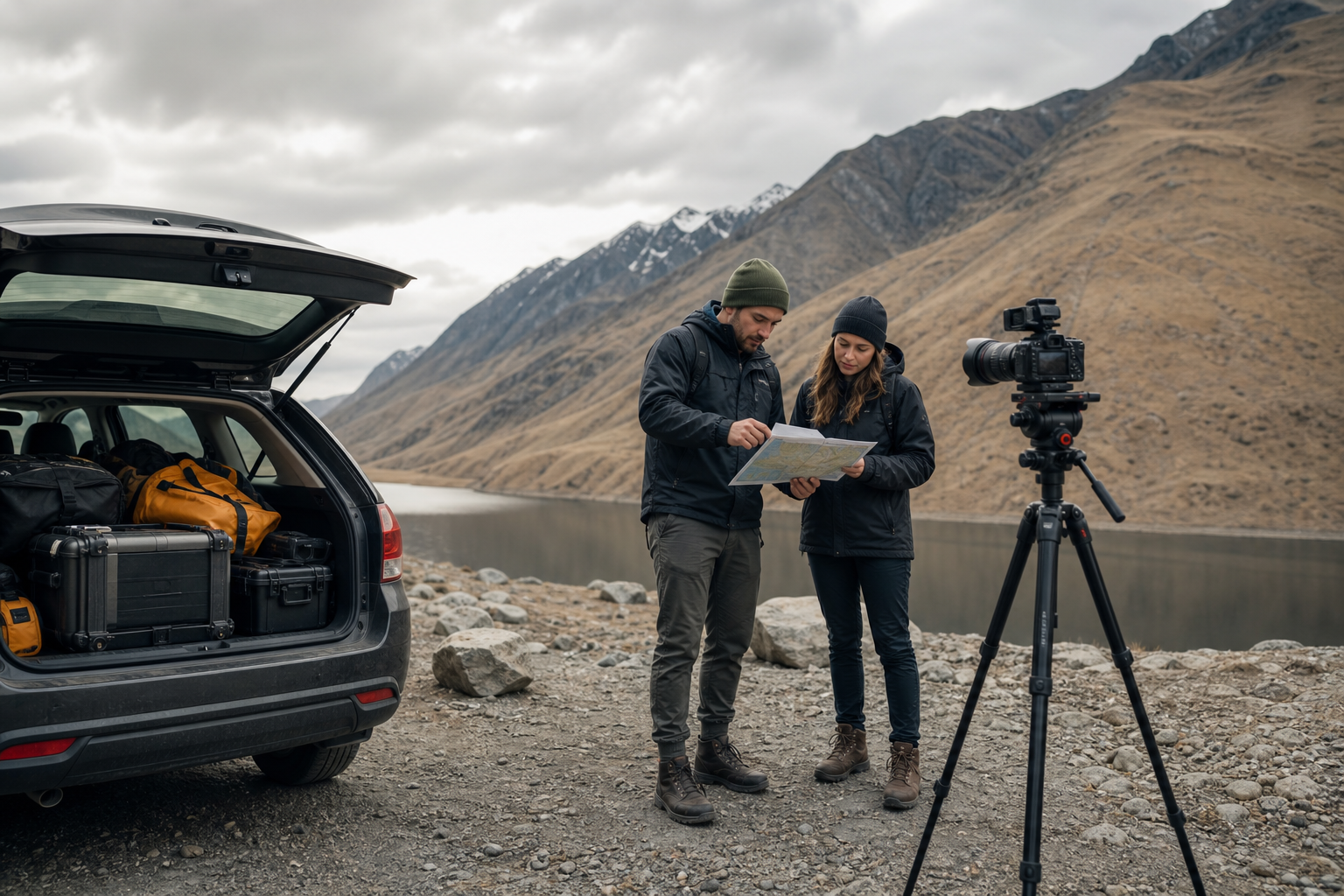
For on-location shoots, confirm who arranges permits, which party insures the shoot, and whether there are location fees. Compare vendors on their strategy for site surveys, crew travel, and contingency plans for weather or access restrictions. When the vendor handles permits, request a short summary of expected permit types and who signs them.
- Checklist to bring to vendor calls: expected shoot addresses, indoor versus outdoor needs, permit requirements, power and parking availability, and any restricted access windows.
Vendor questions, scoring checklist, and next steps
Below are 15 exact questions to use on discovery calls and in proposals. Group them by decision area and score each answer in your matrix.
Creative fit
- Which recent project best matches our brief and why?
- Can you show the full project and the social cutdowns for that project?
Process and collaboration
- How do you structure preproduction and stakeholder approvals?
- Who will be on set, and who is our day-to-day contact during production?
- How many review rounds are included in postproduction?
Deliverables and rights
- What specific deliverables and file formats are included?
- Will we receive masters and raw files? If not, what license is included?
- How is music and stock content licensed for our use?
Timeline, pricing, and logistics
- What is the proposed project timeline by phase?
- Do you provide line-item pricing and a change-order policy?
- Who arranges permits, location access, and insurance for on-site shoots?
Next step: review candidate portfolios, score each vendor using the checklist above, then request a scoped proposal from your top scorers that includes line-item estimates and explicit rights language. If you want to practice scoring, use the vendor’s portfolio as a sample evaluation.
Frequently asked questions
How long does brand videography typically take from concept to delivery?
Timelines vary with scope. A focused campaign with a single hero film and social cutdowns commonly moves from concept to final delivery in four to eight weeks. More complex shoots with multiple locations, talent, or significant postproduction needs can take longer. Always confirm milestone dates in writing before work begins.
What deliverables should be included in a brand video package for social channels?
At minimum, request a hero film, two to four cutdowns, vertical and square formats for short-form platforms, caption files or embedded captions, and high-resolution stills. Specify the formats and aspect ratios you require so the vendor includes those files in the price.
Who usually owns the raw footage and final masters after a brand video project?
Ownership terms vary. Some vendors transfer masters and raw footage to the client, while others grant a license for specified channels and durations. Confirm who owns the masters and what license is being granted before signing. Use the RFP phrasing above to request clear language.
How can I evaluate creative fit from a short showreel or highlight reel?
Ask to see the full projects behind the showreel clips and look for consistent tone, narrative structure, and channel adaptations. A showreel alone may mask who did what work, so request project credits and outcomes to determine if the vendor’s strengths match your needs.
What should I ask about revisions and change orders before signing a contract?
Confirm how many revision rounds are included, what constitutes a revision versus a change in scope, and the hourly or flat fees for additional rounds. Make sure the proposal lists a change-order approval process that requires written sign-off before extra work begins.
Compare creative fit, process transparency, and rights clarity equally. If those three align with your brand, price and timeline become easier to evaluate.
Ready to evaluate vendors? Review examples and practice the checklist with our portfolio at Scene Stealers' Creations portfolio, or contact us through our website to discuss a scoped proposal.