What marketers need to know about brand promotion content?
Clear definition of brand promotion content, which formats work at each funnel stage, promotion and repurposing tactics, KPIs, and a hiring checklist.

What marketers need to know about brand promotion content?
Brand promotion content is any creative asset a company produces to put its brand, product, or story in front of an audience with the goal of influencing awareness, consideration, conversion, or retention. Unlike interruptive advertising, branded content informs, entertains, or educates first, with the brand message supporting the experience rather than overtaking it. This article defines the term, explains which formats suit each funnel stage, outlines promotion tactics you can use, describes how to repurpose one shoot into many assets, and gives a vendor checklist to use when you hire a photographer, videographer, or creative studio.
What brand promotion content means
At its core, brand promotion content is intentional creative work that helps a brand reach marketing goals. It includes still photography, short-form video, behind-the-scenes sequences, product demonstrations, and user generated content created or curated to support a campaign. The practice of branded content focuses on audience value first, then brand placement, because that approach increases receptivity and long term brand equity, which is distinct from a straightforward sales ad. For an accessible overview of the idea and its practice, see this explanation of branded content by Postbae.
Why brand promotion content matters for your funnel
Different kinds of brand promotion content serve distinct roles in the funnel. Awareness assets are designed for reach and memorability, consideration assets build trust and comparison signals, conversion assets remove friction and answer purchase questions, and retention content keeps customers engaged after purchase. A content promotion plan should match each piece to a clear goal because promotion tactics and measurement differ depending on whether you want traffic, backlinks, leads, brand awareness, or engagement. A one-size-fits-all approach wastes budget and attention. For practical framing on aligning content to goals, review content promotion guidance from Respona and Shopify.
Formats and when to use each
Below are the primary formats marketers use for brand promotion content with a one-sentence use case and the channels where each tends to perform best.
Brand photography
Use professional photography when you need high-quality hero images for product pages, editorial features, lookbooks, or paid social. Photographs scale well for ads, website headers, and catalog listings because they read quickly and hold up across sizes. Scene Stealers' Creations lists photography among its core services and can supply production-quality imagery for these use cases.
Short-form promotional video
Use short-form video to capture attention on social platforms and in paid feeds when narrative, motion, or demonstration is required to highlight a product benefit. Short videos are ideal for reels, stories, and in-feed ads because they combine audio and motion to convey context quickly. For social campaign framing and platform fit, see guidance from Sprout Social.
Behind-the-scenes and brand narrative
Use behind-the-scenes content to humanize your brand and build trust during the consideration and retention stages. BTS footage makes teams and processes relatable and creates authentic touchpoints for newsletters, social updates, and PR. Product promotion playbooks also recommend behind-the-scenes and experiential content for memorable activations, as explained by Amazon Ads.
User generated content and social proof
Use UGC when you want volume and social proof. Solicit or incentivize customers to share photos and videos, then repurpose the best material in paid and organic campaigns to increase authenticity and lower production cost. Social strategies that incorporate UGC help with community building and ongoing content volume, as discussed by Sprout Social.
Product demos and experiential content
Use product demonstrations, tutorials, and event coverage to reduce purchase friction and show real use in conversion-focused channels such as product pages, targeted social ads, and email flows. Events and demos also create assets that can be clipped into testimonial videos and social ads for continued promotion.
How to choose a format based on your objective
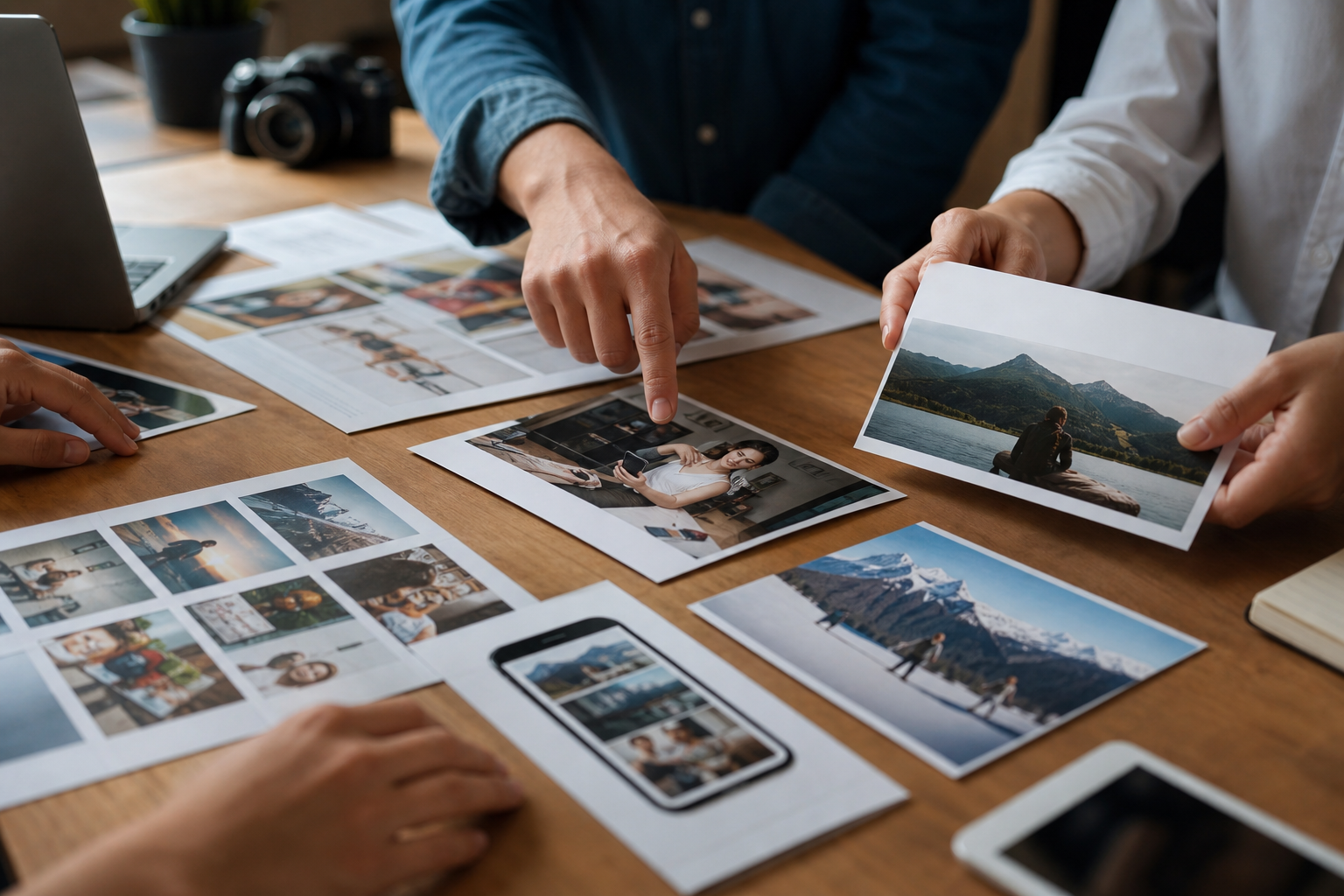
Match creative format to the objective with these decision criteria and quick checks for budget, timeline, and reuse potential.
- Awareness: Choose bold short-form video or hero photography that can run as broad paid or organic placements. Check whether you have a budget for paid amplification and a short production timeline.
- Consideration: Use behind-the-scenes content, longer product explainers, or credible UGC. Check reuse potential for email sequences and landing pages.
- Conversion: Prioritize product demos, close-up photography, and testimonial clips for targeted ads and product pages. Check that deliverables include product detail shots and formatted video cuts for ads.
- Retention: Create exclusive BTS, customer stories, and how-to content for post-purchase emails and community channels. Check whether consent and rights for customer content are documented.
Promotion tactics to amplify created content
Plan owned, earned, and paid distribution together because publishing content is only the start of a promotion plan. Owned channels such as your website and email list provide long-term value and search visibility, so optimize content for SEO and for direct audience touchpoints when possible. These are essential foundations in a content promotion strategy. For practical tactics that pair owned channels with broader promotion, see Shopify and Mailchimp.
Owned channels: SEO, website, and email
Post hero assets on your website and embed videos with descriptive titles and captions to improve search and discovery. Use photography on product pages and in email campaigns to increase conversion confidence. Keep master files and compressed variants ready to swap into templates across channels.
Earned and influencer amplification
Pitch partner blogs, media outlets, and influencers with tailored assets and story angles to earn coverage and extend reach. Build influencer or UGC programs to generate ongoing content volume that feeds your social calendar and provides social proof. For social campaign design and influencer roles, consult Sprout Social's guidance.
Paid promotion and targeting
Add paid social and search to accelerate reach and conversions when you need predictable scale. Create platform-specific edits and captions for each ad placement and align creative to your targeting segments so messaging resonates. Product-focused promotions and event activation examples illustrate how paid creatives complement experiential marketing, as described by Amazon Ads.
Repurposing one shoot into many assets
To improve ROI per shoot, plan deliverables up front so a single production supplies assets for ads, social, email, product pages, and PR. Here is a practical workflow you can follow during planning and on set.
- Define a master shot list that covers hero images, lifestyle variations, close-ups, and short video moments.
- Capture raw video clips in multiple framing ratios and photograph subjects with slightly different props or expressions for variety.
- Request deliverables that include high-resolution masters, web-optimized versions, and pre-cut social edits such as 9:16 and 1:1. You can refer to an internal example for deeper workflow details at this blog post.
- Create a repurposing map that assigns each asset to specific channels and timelines, for example a hero photo for the homepage, a 15-second clip for reels, and a 30-second product demo for targeted ads.
- Archive all masters and document captions and metadata so future teams can reuse assets without extra shoots.
How to measure brand promotion content by objective

Use KPIs that map to the objective so measurement is meaningful and actionable.
- Awareness: Track reach, impressions, and view-through rates on paid and organic channels. Monitor branded search volume and traffic to landing pages.
- Engagement and consideration: Measure likes, shares, comments, time on page, and video completion rate to understand resonance.
- Leads and conversion: Measure click-through rate, add-to-cart events, and conversion rate. Use UTM tagging and attribution windows to tie creative to outcomes.
- Retention: Measure repeat purchases, email engagement with post-purchase sequences, and retention cohort behavior.
Match reporting cadence to campaign length and keep a short tracking setup so you can iterate quickly on creative and targeting. For consolidated advice on aligning promotion to goals, see Respona's overview of content promotion.
Vendor checklist: Questions to ask before you hire a creator
When evaluating photographers, videographers, or studios ask these questions to avoid common misunderstandings and to confirm delivery expectations.
- What exact deliverables will you provide? Ask for formats, sizes, and aspect ratios for web, social, and ads.
- Who owns usage rights and what licensing is included? Confirm commercial use, duration, and whether exclusivity applies.
- How many rounds of revisions are included and what is the turnaround time for edits?
- Can you provide a usage-friendly asset package with high-resolution masters and web-ready variants?
- What is the shoot schedule and how does travel, talent, or location cost affect the quote?
- Do you offer a repurposing plan or add-on editing service to create multiple cuts and sizes from the same footage?
- Can you show relevant portfolio examples for the format and industry I need?
Key questions and red flags
Warning signs include vague licensing language, no clear deliverable list, or an unwillingness to provide masters. If a vendor cannot show concrete examples of platform-specific edits or refuses to put rights and deliverables in writing, ask for clarification before you pay a deposit. Scene Stealers' Creations publishes services in photography, videography, and visual storytelling if you want to confirm what experienced creators typically include.
Common objections and how to handle them
Cost is the most common concern. To make spending defensible, map creative to specific KPIs and reuse plans so you can estimate the asset lifespan and cost per use. Turnaround concerns are solved by agreeing on milestones and interim drafts. If proof of effectiveness is required, start with a smaller test shoot focused on one channel, measure results, and scale what works. For strategic guidance on aligning promotion to goals, review practical content promotion guidance from Shopify and Mailchimp.
Local discoverability and a short contact note
If you operate a local studio, add city, state, and a street address to your site to improve local search and map linkage. Scene Stealers' Creations lists its services and a contact phone number on the official site. For quick contact, call +1 250 200 0606 or visit Scene Stealers' Creations.
Frequently asked questions
How do I choose between photography, short-form video, and UGC for my next campaign?
Choose photography for product pages and high-resolution hero imagery, short-form video for attention-driven social and ads, and UGC when authenticity and volume are priorities. Match the choice to the campaign objective and available budget, and plan repurposing so one shoot feeds multiple channels.
What metrics should I track for awareness content versus conversion content?
For awareness track reach, impressions, and view duration. For conversion track clicks, add-to-cart events, and attributed conversions with UTM tags. Use engagement metrics such as shares and comments to inform creative iteration between the two.
Can one brand shoot realistically supply assets for social, ads, email, and product pages?
Yes, when you plan a master shot list in advance and request platform-specific edits and aspect ratios. Ask the vendor to deliver master files plus web-ready variants so the same shoot covers multiple channels efficiently.
What usage rights and licensing should I ask for when I hire a photographer or videographer?
Request commercial usage rights for the geographic territories and time period you need, and confirm whether exclusivity is required. Ask for written terms that include permitted media, duration, and whether the creator can repurpose the work in their portfolio.
What are reasonable deliverables to request after a brand promotion shoot?
Reasonable deliverables include high-resolution masters, web-optimized images, short video edits in 9:16 and 1:1 formats, a 30-second and a 15-second ad cut, and a usage sheet listing licenses and rights. Confirm the number of final images and video lengths before you sign a contract. For further examples of campaign workflows and portfolio inspiration, see this example.
Ready to commission brand promotion content or ask about a shoot? Contact Scene Stealers' Creations at Scene Stealers' Creations or call +1 250 200 0606 to discuss your project.
Sources: Postbae, Respona, Shopify, Mailchimp, Sprout Social, Amazon Ads, and Scene Stealers' Creations.